


The approval of Regulation (EU) 2023/2055 by the European Commission has generated concern among users of artificial turf in sports fields. Sensationalist media headlines have led to the belief that its use was completely prohibited. However, that statement IS NOT TRUE since what has been approved is the manufacture and marketing of microplastics.
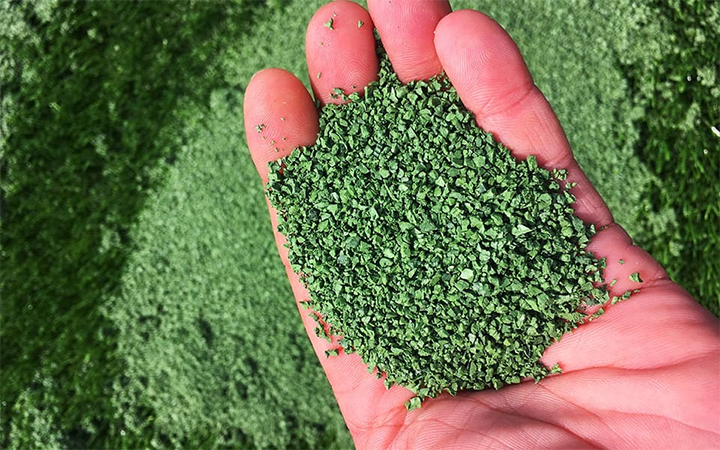
It is essential to explain that this regulation DOES NOT AFFECT artificial turf, but focuses on regulating the substrate used in sports artificial turf facilities, specifically, the rubber or SBR infill, mostly from discarded tires.

In order to clarify all possible doubts that have arisen, from GardenStore we are going to detail the most relevant factors of this regulation and to what extent it affects the installation of artificial turf in sports fields:
Regulation (EU) 2023/2055: Artificial Turf in Sports Fields
The New Regulations Do not Affect Decorative Artificial Turf
The first and most important point that we must make is that the EU REACH Regulation does not concern decorative artificial turf, that is, the one that is installed in public areas, hotels, restaurants, businesses or domestically: in houses, gardens, terraces…
The installation of this type of artificial turf does not require the use of the microplastic infill mentioned above and, therefore, its use and installation remains the same. Moreover, decorative artificial turf has become a sustainable and ecological option due to the low water consumption it requires for its maintenance.
It Only Affects the Substrate Used in Artificial Turf on Sports Fields
After October 17, 2031, infill granules considered microplastics may not be used for new artificial turf sports fields. However, the installation of sports artificial turf fields that use more sustainable and ecological alternatives with organic fillings such as cork, wood or olive pits will be permitted.
In fact, at GardenStore, artificial turf experts, this regulation has not caught us by surprise, it was something we already foresaw, so we have ALREADY carried out installations with ecological materials such as:
- Baeza (Jaén): We installed artificial turf on a football field filling it with silica and then with coconut fiber.
- Seville: We installed artificial turf on an Indoor F7 field that was topdressed with cork.

The Regulations Will not be Mandatory until 8 Years from Now
The regulation establishes a moratorium of 8 years from its date of approval, that is, until October 17, 2031.
During this period, the use of fillers considered microplastics, such as those derived from the recycling of used tires, will continue to be permitted for the installation of sports artificial turf fields.
This means that, until 2031, it will be possible to continue installing artificial turf fields with this type of filling.
Installations Prior to October 2031 may Continue to be Used
It is important to highlight that, as of October 2031, it will not be prevented that sports fields in which this granulate has been used for the installation of artificial turf can continue to be used.
Nor will its removal and elimination be required. Existing fields may continue to be used without further action.
Of course, in order to maintain them, it will be necessary to have sufficient supply of SBR, as it will no longer be available for purchase, and failing that, use a more ecological filling/substrate such as cork, wood, olive pits or coconut fiber.
In short, the new regulations of the European Union do not limit the use of artificial turf, but only regulate the types of filling (those containing microplastics) that are used in the installation of sports artificial turf. With all this, what is intended is to promote sustainability and care for the environment.
If you want GardenStore to advise you on the new regulations and their implications or if you are interested in installing artificial turf on a soccer field, contact us and we will assist you personally. We are experts in artificial turf.


